


What makes a baseball Perform?
Every layer of a baseball plays a role. From the core to the cover, each component influences how the ball feels, flies, and performs.
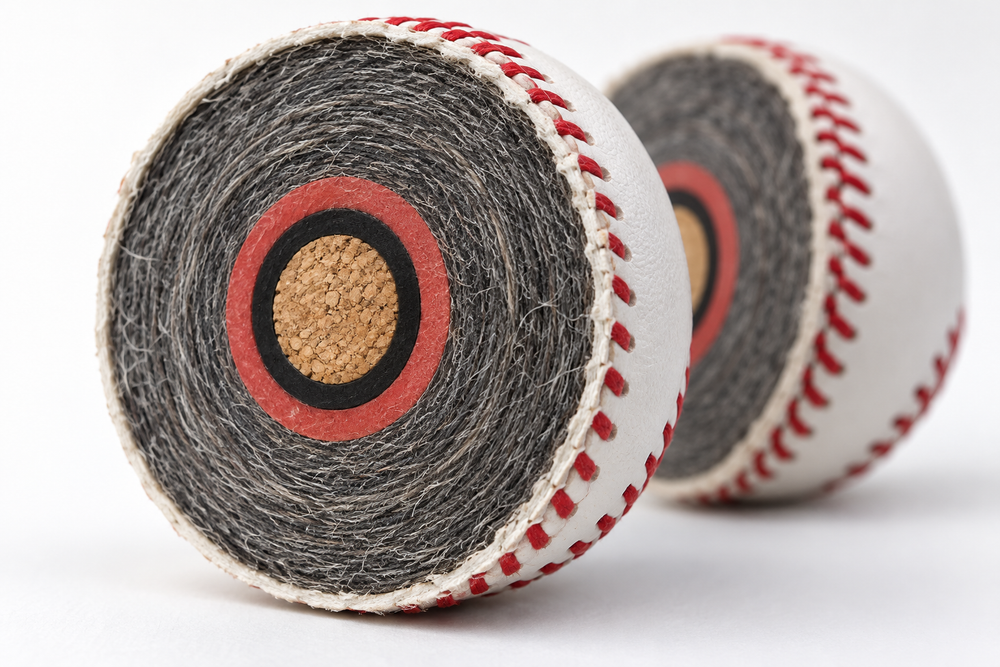
- What it is
The center of a baseball, often consisting of a cork center, or "pill," surrounded by two layers of rubber to form a cushioned cork core.
- Core types
Construction varies from traditional cushioned cork to larger composite cork-and-rubber cores used in different grades and types of baseballs.
- Why it matters
Core materials and construction influence compression, COR (rebound efficiency), firmness, and the ball's pop off the bat.
- On-field performance
A well-constructed core helps deliver consistent rebound, feel, and shape retention through repeated use.
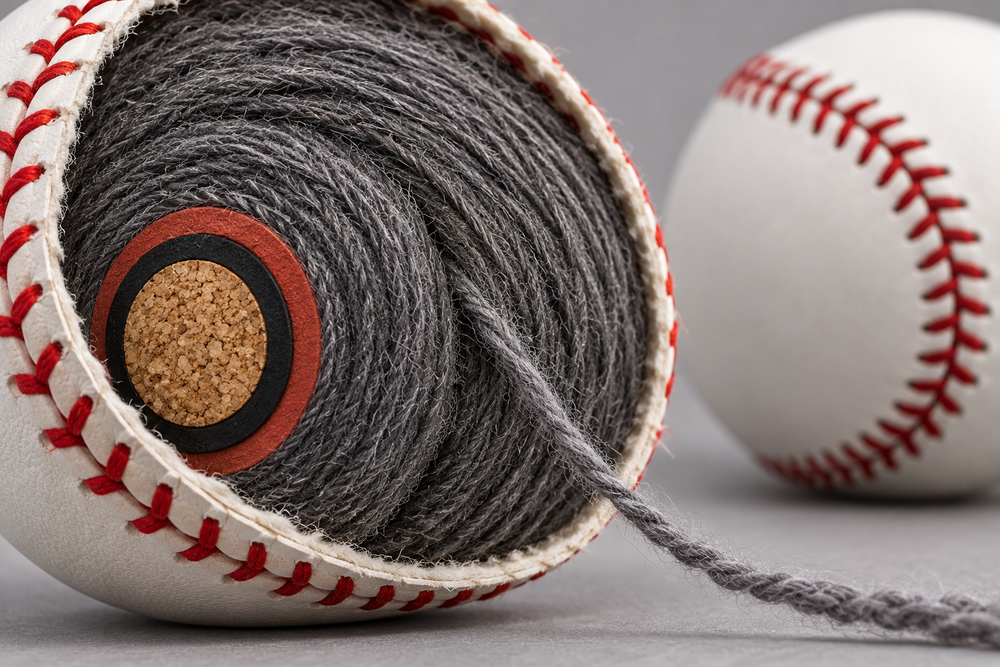
- What it is
Layers of tightly wound yarn surrounding the baseball's core, forming much of the ball's internal structure.
- How it's built
Traditional premium baseballs use multiple layers of wool or wool-blend yarn, while lower-cost models often incorporate higher percentages of cotton or synthetic fibers.
- Why it matters
Wool is valued for its natural elasticity, moisture management, and ability to recover its shape after compression. Higher wool content is generally associated with premium baseball construction, while winding tension and yarn composition also influence firmness, resilience, and durability.
- On-field performance
Properly constructed windings help a baseball maintain its roundness, consistent feel, and rebound characteristics through repeated hits, throws, and catches.

- What it is
Two shaped pieces of leather or synthetic material fitted and stitched together to form the baseball's outer cover.
- How it's built
Premium baseballs typically use high-grade, full-grain leather, while lower-cost models may use lower-grade leather or synthetic covers. Leather is one of the most significant material cost drivers in a baseball, with the grade, quality, and selection of the hide directly influencing manufacturing costs.
- Why it matters
Full-grain leather retains the hide's natural grain structure, providing strength, durability, and a consistent gripping surface. Lower-grade materials may be more prone to surface wear, stretching, or deterioration with repeated use.
- On-field performance
Quality leather, properly fitted and secured to the ball, helps maintain consistent grip, seam integrity, and durability through repeated hits, throws, and catches.
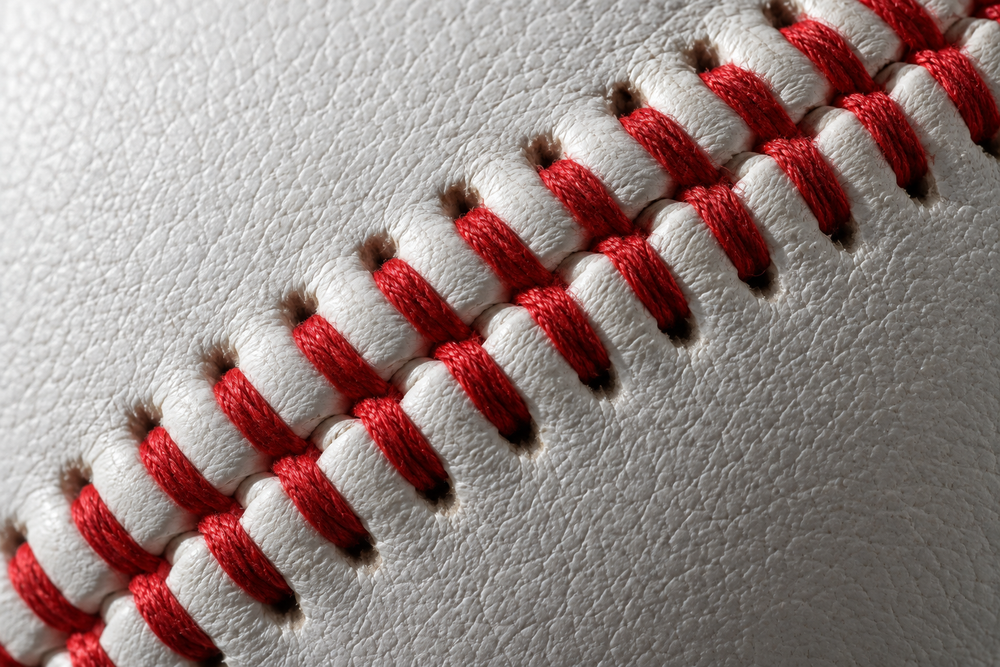
- What it is
Traditionally red cotton thread used to join the baseball's two leather cover panels. A regulation baseball features 108 double stitches, creating its distinctive seam pattern.
- How it's built
Quality leather baseballs are still hand-stitched today. Raised seams sit prominently above the leather surface, while low-profile (flat) seams are stitched closer to the cover, creating a smoother finish.
- Why it matters
Stitching quality and tension help secure the leather cover and maintain seam integrity and durability. Seam height also influences grip, ball release, and airflow around a spinning baseball.
- On-field performance
Raised seams provide a more pronounced grip for both pitchers and fielders, helping with ball control, throwing accuracy, and consistent release. Low seams offer a smoother profile, commonly preferred in professional-style play, and can influence aerodynamic drag and pitch movement. Both seam types affect ball flight depending on velocity, spin, and seam orientation.
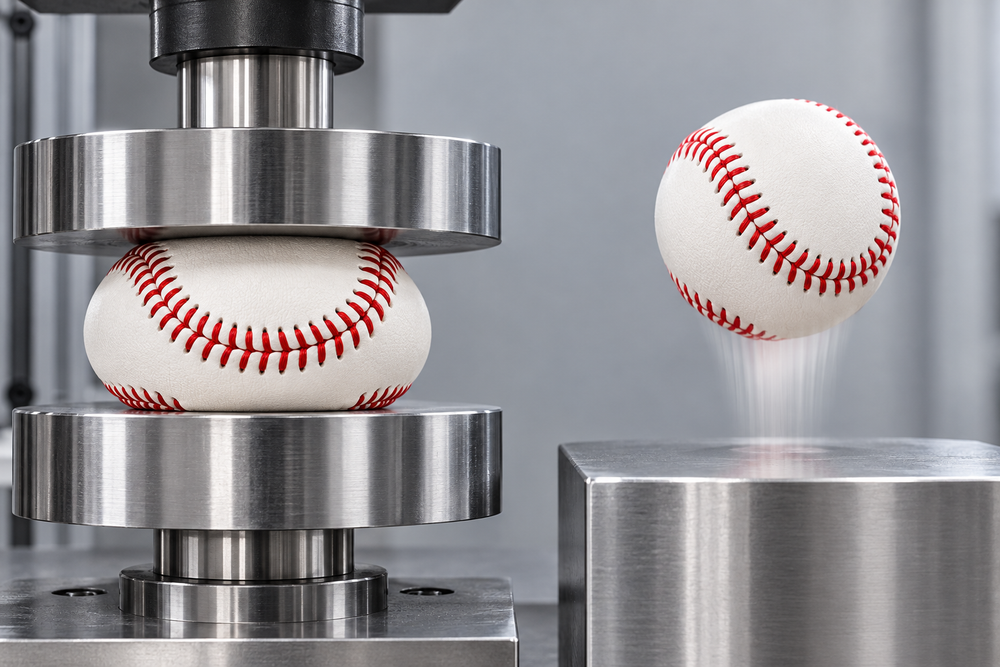
- What it is
COR (Coefficient of Restitution) measures a baseball's rebound efficiency, or how much speed it retains after impact. Compression measures the ball's resistance to deformation under an applied force.
- How it's measured
COR is tested by impacting a baseball against a rigid surface at a controlled speed and comparing its rebound speed to its incoming speed. Compression is measured by applying a controlled load to the ball and recording its deformation or resistance.
- Why it matters
COR helps determine a baseball's liveliness or pop, while compression influences firmness and how the ball responds to impact. Both are important indicators of overall performance and consistency.
- On-field performance
Under comparable conditions, a higher COR generally means greater rebound efficiency and a livelier response off the bat, contributing to higher exit velocity. Compression affects how firm or soft the ball feels during contact, while consistent COR and compression help deliver predictable performance from ball to ball.
Why it all
Matters
Two baseballs can look identical but perform very differently. Core construction, windings, leather quality, seams, COR, and compression all influence how a baseball feels, responds, flies, and holds up over time.
The difference is how these components are engineered to work together.
